Trending

Negative interest rates sound like a contradiction. You put money in a bank, and instead of earning interest, you pay the bank to hold it. That is not how most household accounts work today, and it is not what a negative policy rate automatically means. Still, when central banks push their key rates below zero, the effects ripple outward—through savings rates, loan pricing, bank fees and the way people think about cash. For everyday savers, the sensible response is neither panic nor indifference. It is to understand the mechanics and check the details of your own accounts.
A central bank’s policy rate is the rate it uses with commercial banks, not the rate on your savings account. In normal times, banks earn interest on reserves held at the central bank. If the policy rate turns negative, banks pay a small charge on some of those reserves. The aim is usually to discourage hoarding money at the central bank and encourage lending or spending. It can also put downward pressure on a currency.
The key point for savers: a negative policy rate does not mean every deposit account is instantly charged. Banks have to balance passing on costs with keeping depositors. Retail deposits are often stickier and cheaper funding than wholesale money, and customers can move to cash. So banks tend to protect ordinary current accounts and savings accounts for longer than they protect corporate deposits. If you see headlines about negative rates, check which rate is negative and which balance it applies to.
It also helps to separate the policy rate from the deposit rate you actually receive. A central bank might charge banks on reserves while your local bank keeps your savings rate at zero. In some countries, negative rates have been passed on to large corporate deposits or very wealthy clients first, while ordinary household accounts have remained at or near zero. The headline is a signal about the direction of travel, not a direct debit on every saver’s account.
The most likely effect for savers is not a negative number on your statement. It is a rate that stays at or near zero while fees do more of the work. When policy rates are very low, banks have less room to pay interest. They may cut promotional rates, require larger minimum balances to earn the headline rate, or introduce monthly maintenance charges. A savings account paying a tiny rate while charging a monthly fee is effectively negative for a small balance. Do the math on the total relationship, not just the advertised rate.
For example, a $10,000 balance at a nominal rate of 0% is not costly in itself. But a $5 monthly account fee costs $60 a year, which is effectively a 0.6% annual charge on that balance. On a $2,000 balance, the same fee is an effective 3% charge. Or suppose a bank applies a negative rate of 0.4% only to balances above $50,000. A saver with $60,000 would pay about $40 a year on the excess. That is modest, but it changes the calculation if the money could sit in a different account type or be split across insured institutions.
Watch for tiered rates: the top rate may apply only to a limited balance. Check whether interest is calculated daily or monthly and whether withdrawals trigger a lower rate. If your bank introduces a fee, ask whether a different account type avoids it. Do not assume a negative policy rate means you should close every account; access and safety matter. A current account with easy transfers, a debit card and deposit insurance may be worth more than a slightly higher rate at an institution with poor access or unclear terms.
A negative policy rate can also make banks less generous with promotional offers. Instead of a headline rate, you may see “relationship benefits,” loyalty tiers or bundled products. Those can be useful, but they can also obscure the true cost. Ask for the annual fee schedule and compare the account as a package, not just the savings rate.
Negative policy rates are intended to make borrowing cheaper. That can feed through to mortgages, business loans and some consumer credit—especially variable-rate products tied to short-term benchmarks. But the pass-through is uneven. Banks may protect profit margins, tighten credit standards, or price in higher risk. A central bank cutting rates below zero is often a sign the economy is weak, and lenders may become more cautious, not less.
If you have a variable-rate mortgage, check how the benchmark is defined and whether there is a floor at zero. Some contracts do not pass negative rates on to borrowers. Fixed-rate borrowers see no immediate change. Credit card and overdraft rates are often sticky and may not move much at all. If you are borrowing, compare the total cost, not just the headline rate. Ask about fees, early repayment charges and whether a lower rate comes with a longer term. A cheaper loan is only cheaper if it fits your cash flow. For decisions about mortgages or debt, consider speaking to an independent adviser.
There is also a psychological effect. When rates are negative or near zero, some savers feel pressured to take more investment risk or to borrow because money “isn’t working.” That can be reasonable in small doses for long-term money, but it is a poor reason to take on debt or lock up an emergency fund. The purpose of an emergency fund is liquidity and safety, not maximum yield.
When deposit rates turn negative, holding physical cash can look rational. If the bank charges a small fee on a large balance, keeping the money in a safe at home avoids the charge but introduces other costs and risks. Cash can be stolen, lost, damaged by fire or flood, and it is not insured the way a bank deposit may be. Large cash holdings also create practical problems: paying bills, proving the source of funds for a property purchase, making large transactions and depositing the money again if banks impose limits or ask questions about cash handling.
Physical cash also earns no interest, and if inflation is positive, its purchasing power erodes. A note under the mattress is safe from a bank charge but not from rising prices. For most households, the right answer is not to withdraw a life savings in notes. Keep a modest emergency cash reserve if that helps you sleep at night, but keep the bulk of your money in insured accounts and understand the fees before you move it.
When people talk about negative interest rates, they usually focus on the nominal rate—the number printed on the account. But what matters for everyday savers is the real return: the interest rate after inflation. If your savings account pays 0% and prices rise by 2% a year, your real return is roughly -2%. In that sense, many savers have already experienced negative real returns even when their bank statement never shows a negative nominal rate.
A negative policy rate can make that situation more visible, but it does not change the basic principle. The goal is not to chase the highest headline yield at any cost. It is to balance three things: safety, access and return. Money you may need next month should not be locked into a long-term product just to avoid a small fee. Money you will not need for several years can be considered for fixed-term deposits, government-backed savings products or diversified investments, depending on your circumstances and risk tolerance.
For most savers, the first question is not “How do I avoid a negative rate?” It is “How much of this money do I need to keep safe and accessible, and what is the real cost of keeping it there?”
Negative interest rates are unsettling because they reverse a familiar habit: saving is supposed to be rewarded. But for most everyday savers, the practical effect is a slow squeeze rather than a dramatic charge. Rates stay low, fees become more important, and the fine print matters more than the headline. By checking your own accounts, calculating the real cost and keeping safety and access in view, you can respond calmly rather than react to the label alone.
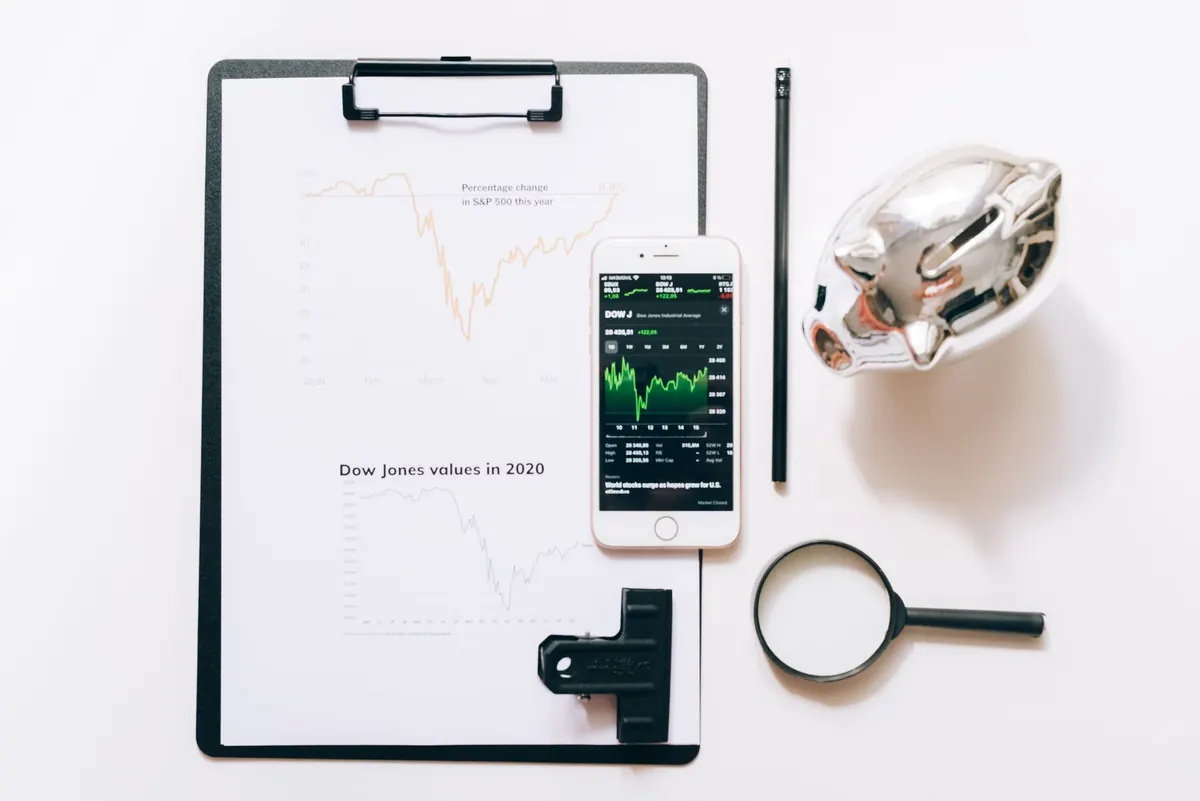
Photo: Leeloo The First / Pexels